
Ok

Ok

What is the question
Cancel
PICTURE FRAMES
 CUSTOM PICTURE FRAMES
CUSTOM PICTURE FRAMES
Design Your Framing Package Online!
Add Mats, Glass & Acrylic, Mounting Board And More.





Search
☰

My Account
Log In
Favorites
Saved Designs
Shopping Cart
Regular Acrylic for Picture Frames
Practical guidance for picture framing projects
Clear demonstrations you can review as needed
Help available from experienced picture framing specialists
Understanding Regular Picture Frame Acrylic
Regular clear acrylic is a lightweight, shatter-resistant alternative to traditional picture frame glass. It provides clear viewing while reducing the weight of a completed frame, making it useful for large frames and displays that may be handled or moved frequently.
In this video, a WebPictureFrames framing specialist explains the practical characteristics of regular acrylic and where it fits among the available picture frame glazing options.
Lower Weight
Acrylic weighs less than traditional glass and can make large framed pieces easier to handle, transport and hang.
Break Resistance
Its resistance to shattering makes acrylic useful in family homes, children's rooms, schools, offices and high-traffic spaces.
Clear Viewing
The clear glossy surface provides bright, dependable viewing for posters, prints, photographs and everyday artwork.
Material discussed in this video
The Clear Acrylic Explained Above
The regular glazing discussed in this video is available from WebPictureFrames as ACRYLITE FF3 clear picture frame acrylic. Visit the product page for specifications, available dimensions, current pricing and ordering options.
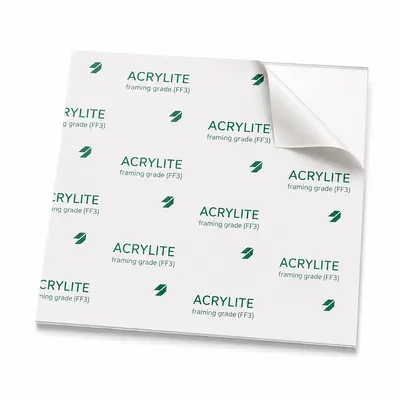
ACRYLITE FF3 Clear Acrylic
Shop ACRYLITE FF3 Acrylic
When Regular Acrylic Makes Sense
- Posters, prints, photographs and replaceable artwork
- Large frames where reducing glazing weight is important
- Frames displayed in children's rooms, schools or public spaces
- Artwork that will be transported or moved regularly
- Everyday framing projects that do not require conservation-level UV protection
How It Differs From Specialty Acrylic
Regular clear acrylic is a practical general-purpose glazing material, but specialty acrylic products offer additional reflection control, UV filtering or protective surface coatings.
- Non-glare acrylic uses a matte surface to diffuse distracting room reflections.
- Conservation acrylic provides stronger UV filtering for valuable or light-sensitive artwork.
- Optium Museum Acrylic combines premium anti-reflective clarity, UV protection, anti-static performance and abrasion resistance.
Regular Picture Frame Acrylic Questions
Is regular acrylic the same as picture frame glass?
No. Acrylic is a clear plastic glazing material. It is lighter and more resistant to breakage than traditional glass, but its surface requires careful handling and cleaning to avoid scratches.
Does regular acrylic reduce reflections?
Regular acrylic has a clear glossy surface and can show room reflections. Non-glare acrylic diffuses reflections with a matte surface, while Optium Museum Acrylic provides premium optical reflection control.
Is regular acrylic appropriate for valuable artwork?
For valuable, irreplaceable or light-sensitive artwork, conservation-grade acrylic is generally more appropriate because it provides stronger UV filtering. Regular acrylic is better suited to everyday and replaceable artwork.
Why is acrylic often used in large frames?
Acrylic weighs less than traditional glass and resists shattering. These characteristics make large framed pieces easier and safer to handle, transport and install.
How should picture frame acrylic be cleaned?
Use a clean, soft microfiber cloth and a cleaner specifically approved for acrylic. Avoid abrasive cloths, paper towels and household glass cleaners that are not intended for acrylic surfaces.
Made in the USA
Handcrafted by American framing experts
Family Owned
Serving customers for over 40 years
Premium Shipping
Professionally packaged for safe delivery
Ready to Hang
Hardware included with all frames
Framing Specialists
Over 40 years of custom framing experience