
Ok

Ok

What is the question
Cancel
PICTURE FRAMES
 CUSTOM PICTURE FRAMES
CUSTOM PICTURE FRAMES
Design Your Framing Package Online!
Add Mats, Glass & Acrylic, Mounting Board And More.



Search
☰

My Account
Log In
Favorites
Saved Designs
Shopping Cart
Narrow Charcoal Box Picture Frame



Customize Your Design With These Options
Artwork Size
8 x 10
Change Size
Upload Image

Frame


$27.83
Glass & Acrylic
Mounting Board
Matting
Spacers and Walls
Stretcher Bar
Frame Liner
Frame Fillet
Art Thickness
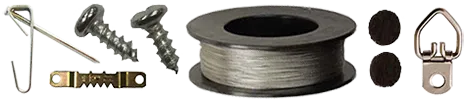
Hanging Hardware

FREE
Art Re-Shipping Box
Precision custom cut to your exact dimensions
Professionally packaged for safe shipping
Ships nationwide
Made in the USA
Experienced picture framing specialists
SKU: V798
Narrow Charcoal Box Picture Frame Details
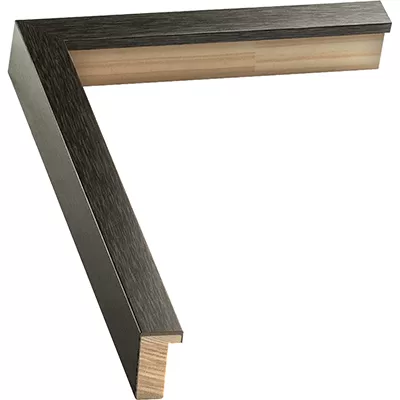
V798 is a wood picture frame featuring a narrow charcoal-gray box profile with subtle two-tone wood grain. Its 3/4 inch face and 1-1/4 inch overall moulding height give the profile its characteristic scale and contour.
On Narrow Charcoal Box Picture Frame, the 3/4 inch face creates a compact border, allowing the artwork and any matting to remain visually dominant. This narrow scale defines the perimeter without turning the frame into a major block of color.
Narrow Charcoal Box Picture Frame has a 1-1/4 inch overall moulding height, establishing the side silhouette created by a narrow charcoal-gray box profile with subtle two-tone wood grain. Its 1 inch usable rabbet and approximately 1/4 inch lip coverage describe the working space behind the opening. As a standard frame, the lip overlaps the front edge of the artwork or framing package.
Works Visually With
Narrow Charcoal Box Picture Frame can complement student artwork, contemporary prints, photographs, and layered presentations. The restrained front face of Narrow Charcoal Box Picture Frame keeps attention near the artwork, while this moulding's taller side profile contributes architectural depth from an angled view.
For paper artwork in Narrow Charcoal Box Picture Frame, matting can create visual separation from the narrow front face. For other presentations, consider how the deeper side silhouette will read in the intended display.
Design and Visual Character
The tall rectangular silhouette supplies depth while the narrow face keeps the front view clean.
The visible variation across Narrow Charcoal Box Picture Frame breaks up reflected light and gives this finish more tonal movement than a uniformly smooth profile.
From the front, the 3/4 inch face of Narrow Charcoal Box Picture Frame provides the visible outline around the artwork. From the side, its 1-1/4 inch overall height becomes a defining part of this frame's architectural character.
Framing specialist note: Narrow Charcoal Box Picture Frame is a 1-1/4 inch tall standard frame whose lip overlaps the front edge of the artwork or package. Its presentation is therefore different from the separated reveal of a canvas floater frame.
Frame Specifications
- SKU
- V798
- Material
- Wood
- Face width
- 3/4 inches
- Overall moulding height
- 1-1/4 inches
- Usable rabbet depth
- 1 inch
- Approximate lip coverage
- 1/4 inch
Compare Similar Black Picture Frames
- Compare with v778 - 3/4 inch face and 1-5/8 inch rabbet
- Compare with V547-1 - 3/4 inch face and 1-7/8 inch rabbet
- Compare with V471-1 - 1-1/8 inch face and 1-1/8 inch rabbet
- Compare with V172 - 1-1/8 inch face and 1-5/8 inch rabbet
Continue Shopping and Planning
- Shop black wood picture frames in other widths and profile styles.
- Browse custom wood picture frame collections by color and design.
- Explore custom picture mats for artwork on paper.
Made in the USA
Handcrafted by American framing experts
Family Owned
Serving customers for over 40 years
Premium Shipping
Professionally packaged for safe delivery
Ready to Hang
Hardware included with all frames
Framing Specialists
Over 40 years of custom framing experience
