
Ok

Ok

What is the question
Cancel
PICTURE FRAMES
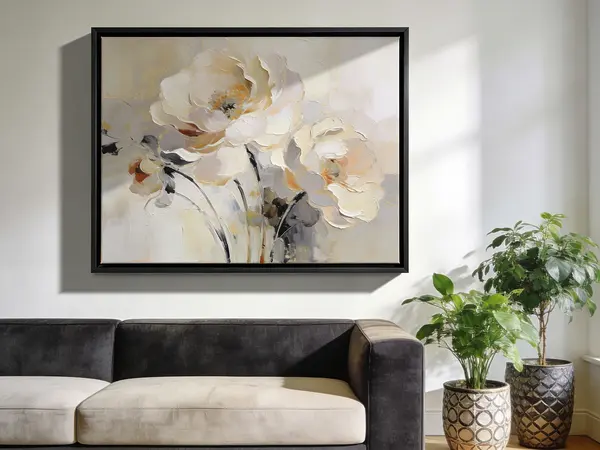 CUSTOM PICTURE FRAMES
CUSTOM PICTURE FRAMES
Design Your Framing Package Online!
Add Mats, Glass & Acrylic, Mounting Board And More.



Search
☰

My Account
Log In
Favorites
Saved Designs
Shopping Cart

Picture Frame Collections
Start with what you are framing or the presentation you want to create. These curated collections bring together useful shopping paths for photographs, credentials, posters, jerseys, memorabilia, gifts, memorials, and coordinated interiors.
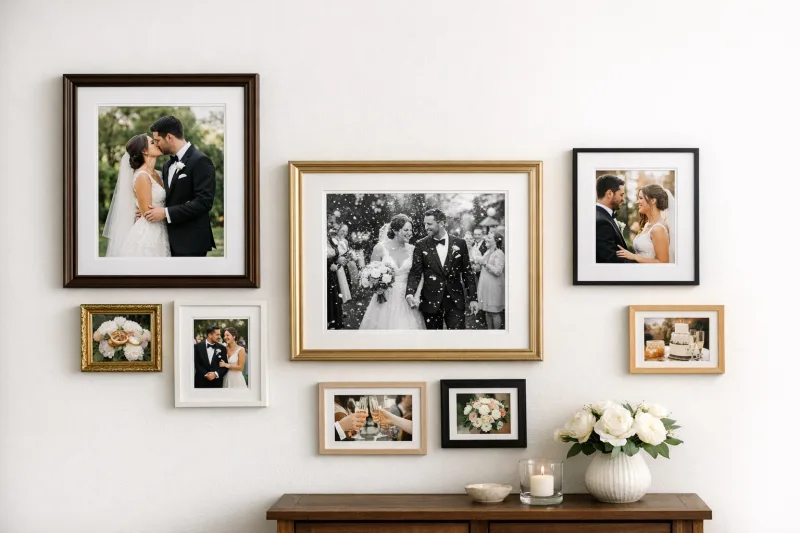
Wedding Photo Frames
Compare framing options for wedding portraits, ceremony photographs, invitations, and meaningful keepsakes.
Explore Collection
Certificate/Diploma Frames
Find framing options for diplomas, certificates, licenses, awards, and other professional credentials.
Explore Collection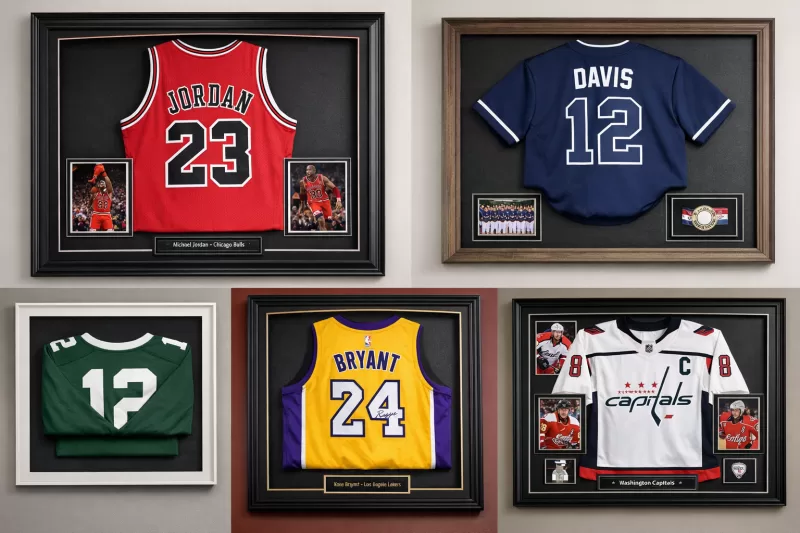
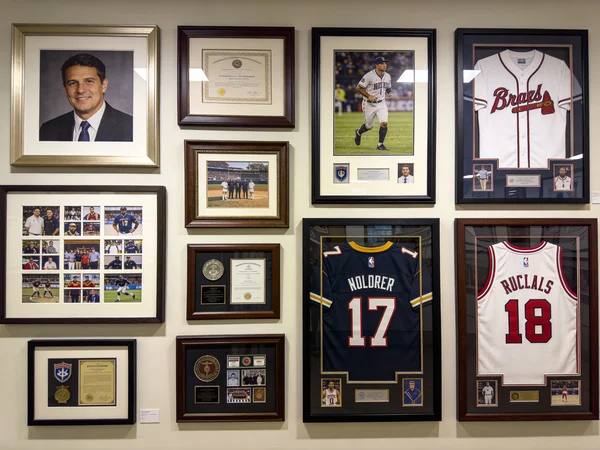
Sports Jersey Frames
Plan a dimensional display for a sports jersey, with room for the mounted garment and framing components.
Explore Collection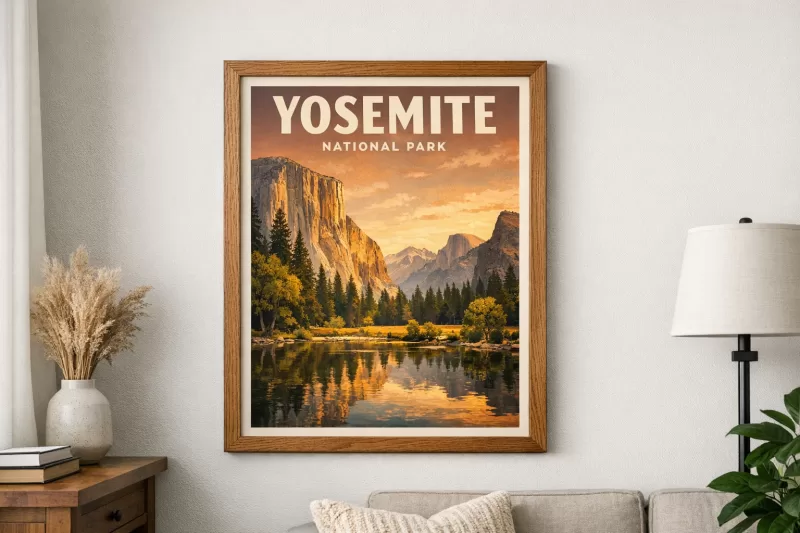
Wood Poster Frames
Explore wood frame profiles for posters and large-format prints in custom and common display sizes.
Explore Collection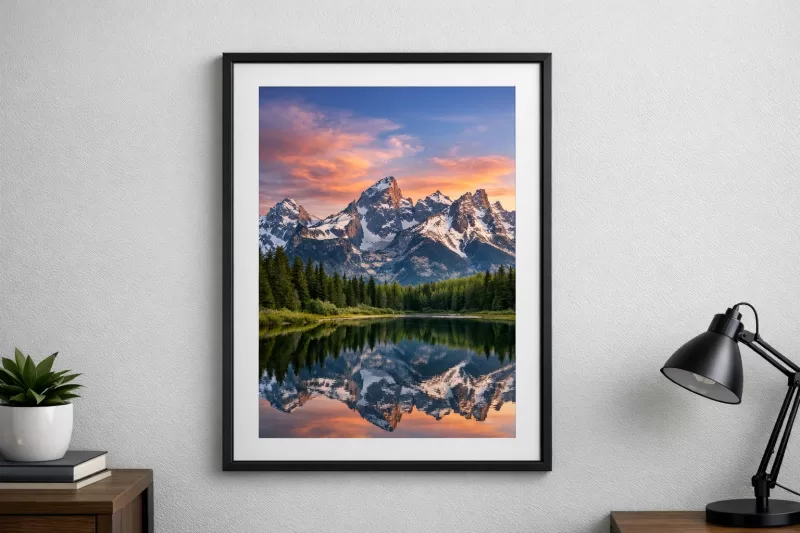
Metal Poster Frames
Compare streamlined metal frame profiles for posters, photography, graphic art, and contemporary rooms.
Explore Collection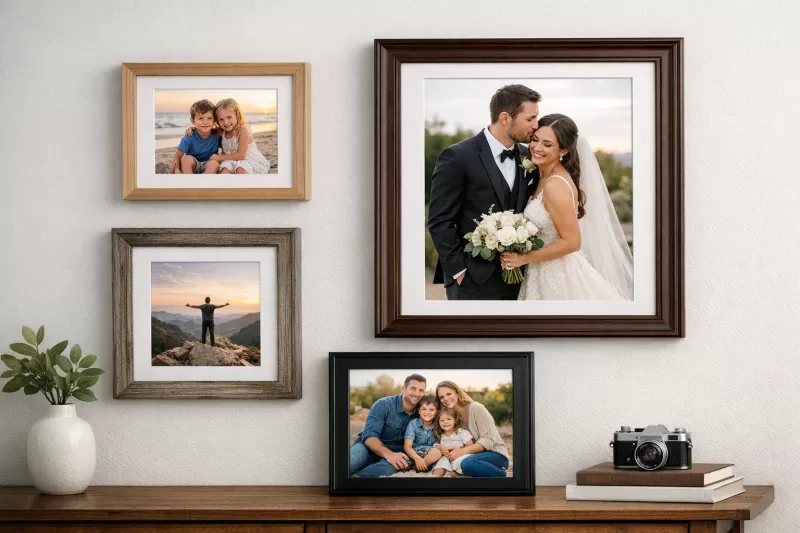
Photo Frames
Browse wood picture frames for photographs, from individual portraits to coordinated wall displays.
Explore Collection
Minimalist Picture Frames
Find restrained frame profiles with clean lines that keep visual attention on the artwork or photograph.
Explore Collection
Memorial Picture Frames
Explore thoughtful framing paths for remembrance photographs, documents, and personal mementos.
Explore Collection
Interior Design Frames
Compare frame directions for coordinated rooms, repeated installations, and design-led artwork displays.
Explore Collection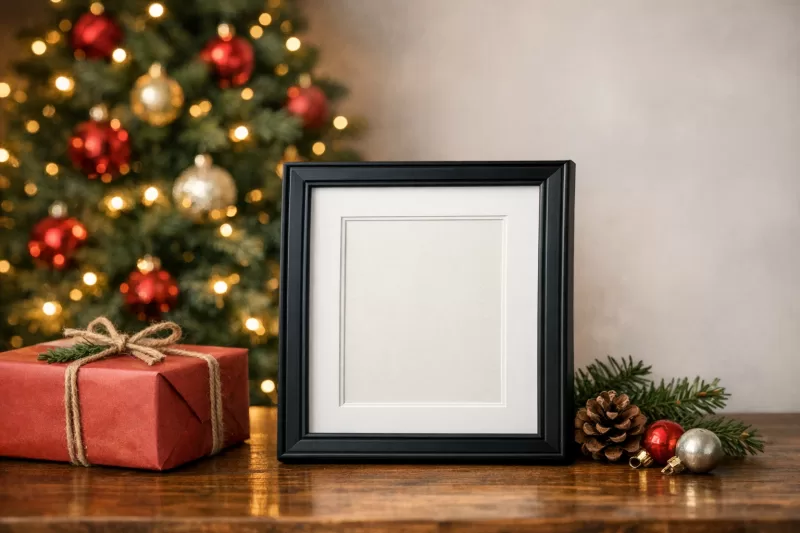
Holiday Gift Frames
Find framing ideas for photographs, artwork, and keepsakes selected for personal holiday gifts.
Explore Collection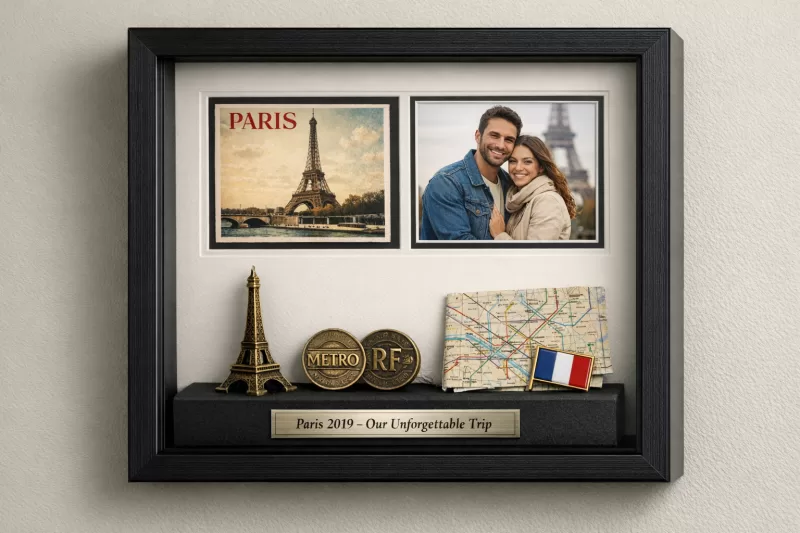
Memorabilia Frames
Plan framing for meaningful objects and keepsakes by considering object depth, mounting, and glazing clearance.
Explore CollectionChoose a Collection by Project
A picture frame collection is a focused starting point, not a substitute for checking the individual moulding and framing package. Begin with the purpose of the display, then compare the frame material, face width, profile shape, finish, sheen, usable rabbet depth, and available component options.
The frame must both look appropriate around the piece and physically accommodate everything behind its face. Artwork size affects visual scale, while artwork construction and the complete package depth determine fit.
Photographs, Posters, and Documents
Consider whether the presentation will use glazing, one or more mats, mounting board, and backing. Add those component thicknesses before comparing the total package with the frame rabbet depth.
Canvas and Rigid Art Panels
Measure the artwork's outside width, height, and complete depth. Standard canvas frames overlap the artwork edge; canvas floater frames create a visible reveal and require a compatible mounting method.
Jerseys and Memorabilia
Dimensional displays require enough interior clearance for the mounted object, glazing separation, backing, and fitting hardware. Object depth alone does not determine the full frame depth needed.
Series and Coordinated Rooms
For repeated frames, compare finish consistency, face width, artwork scale, viewing distance, and the visual weight of the complete group rather than evaluating each frame in isolation.
Move From Inspiration to a Complete Framing Plan
Once a collection establishes the direction, verify the exact product specifications and decide what the finished order must include. Mats, glazing, backing, spacers, mounting, fitting hardware, and hanging hardware serve different purposes and are not automatically required for every project.
Continue Your Project
Compare All Picture Frame Types
Review wood, metal, and canvas floater frame paths when your project is not limited to one use-case collection.
Design a Custom Picture MatChoose mat colors, borders, openings, and layers for compatible photographs, documents, prints, and works on paper.
Compare Glass and AcrylicEvaluate glazing choices for compatible paper artwork, photographs, documents, and dimensional displays.
Measure the ArtworkUse the artwork type and intended presentation to identify the width, height, and depth measurements that matter.
Check Package DepthAdd the artwork and component thicknesses, then compare that total with the usable rabbet depth of the frame.
Browse Framing GuidesFind practical help for measuring, selecting components, fitting artwork, and installing compatible framing projects.
Need help confirming fit? The most useful details are the artwork's exact width, height, depth, material, and the components you intend to place in the frame. Contact our framing team when a project has unusual construction or clearance requirements.
Framing Guidance Based on Real Project Experience
WebPictureFrames.com is supported by a family-owned framing business with more than 40 years of practical experience. Our guidance focuses on the decisions that affect an actual finished frame: accurate measurements, moulding proportions, usable rabbet depth, component compatibility, mounting, fitting, and installation.
Product specifications remain the final authority for an individual frame. If artwork is valuable, fragile, unusually heavy, deeply textured, or difficult to mount reversibly, consult an experienced framing professional or conservator before selecting materials or attaching the artwork.
Framing guidance reviewed by WebPictureFrames.com framing specialists. Last reviewed August 2026.
Made in the USA
Handcrafted by American framing experts
Family Owned
Serving customers for over 40 years
Premium Shipping
Professionally packaged for safe delivery
Ready to Hang
Hardware included with all frames
Framing Specialists
Over 40 years of custom framing experience