
Ok

Ok

What is the question
Cancel
PICTURE FRAMES
 CUSTOM PICTURE FRAMES
CUSTOM PICTURE FRAMES
Design Your Framing Package Online!
Add Mats, Glass & Acrylic, Mounting Board And More.


Search
☰

My Account
Log In
Favorites
Saved Designs
Shopping Cart
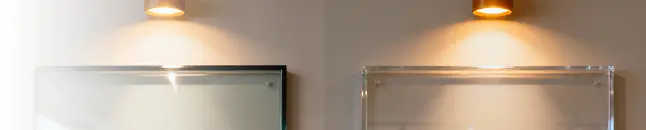
Picture frame glass protects artwork while affecting reflections, color, clarity, and long term preservation. This guide compares Tru Vue Museum Glass and Tru Vue Anti-Reflective Glass so you can choose the best option for your artwork, display environment, and budget.
1. Why Picture Frame Glass Choice Matters
Picture frame glass is more than a clear cover. It affects how easily you can see the framed image, how much glare appears in the room, and how well sensitive artwork is protected from ultraviolet light. The right glass can make artwork look clearer while helping reduce the risk of fading and discoloration.
- Protects artwork from dust, fingerprints, and accidental contact.
- Reduces distracting reflections from windows, lamps, and overhead lighting.
- Provides up to 99 percent UV protection when you choose Tru Vue Museum Glass.
- Improves color, contrast, and fine-detail visibility.
- Supports better long term preservation of valuable or sentimental items.
WebPictureFrames offers two custom-cut Tru Vue glass choices: Tru Vue Museum Glass and Tru Vue Anti-Reflective Picture Frame Glass.
2. Compare Our Tru Vue Glass Options
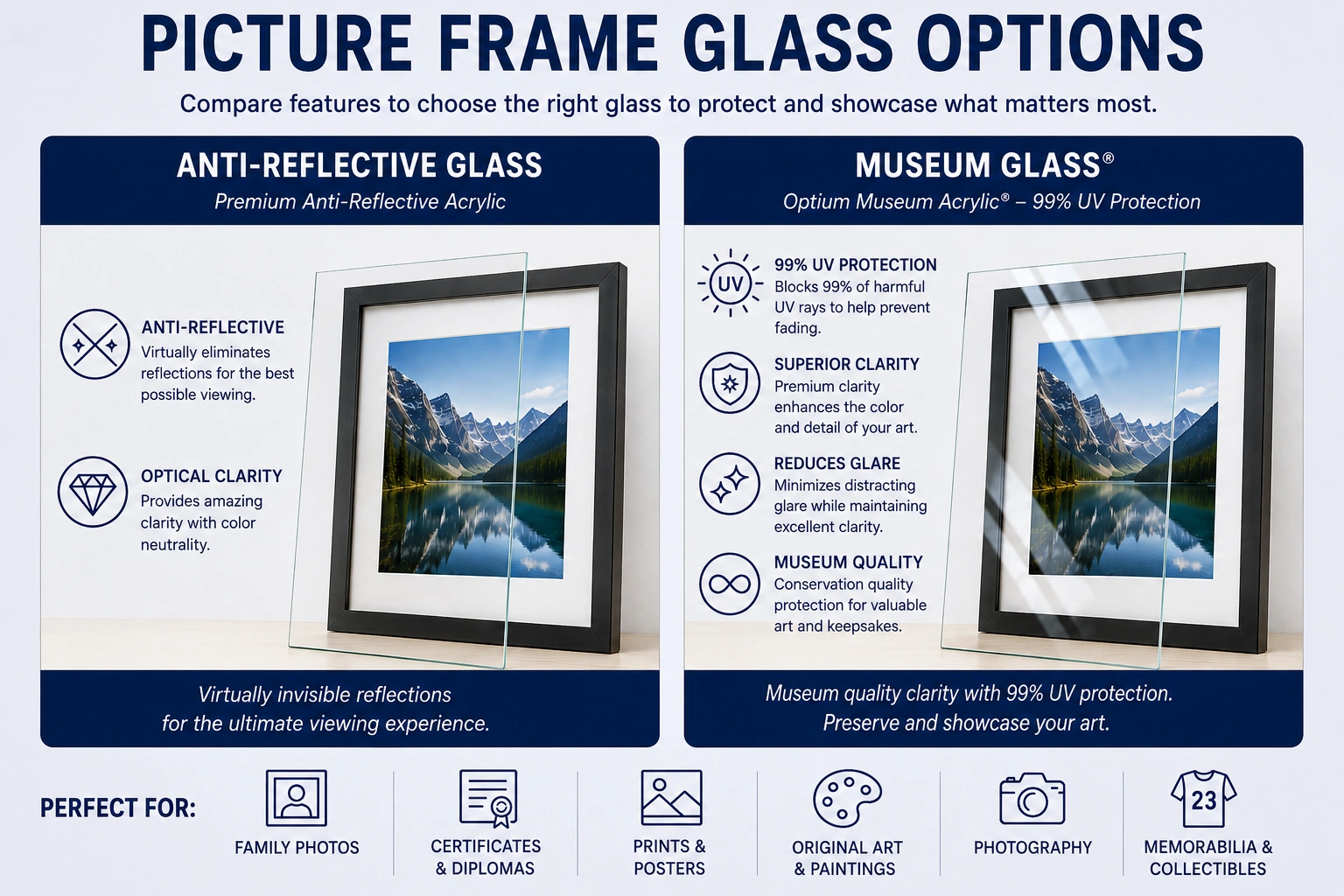
Both glass options improve viewing by reducing reflections, but they are designed for different priorities. Museum Glass is the premium conservation choice. Anti-Reflective Glass is a strong value when glare reduction is the primary goal.
| Feature | Tru Vue Museum Glass | Tru Vue Anti-Reflective Glass |
|---|---|---|
| Reflection control | Premium anti-reflective viewing with glass that appears virtually invisible. | Reduces distracting reflections for clearer viewing. |
| UV protection | Blocks up to 99 percent of UV light. | Does not provide UV protection. |
| Best use | Original art, heirlooms, valuable photographs, limited editions, and premium displays. | Posters, certificates, decorative prints, photographs, and displays where glare is the main concern. |
| Viewing quality | Anti-reflective viewing with excellent color and detail visibility. | Anti-reflective viewing with excellent color and detail visibility. |
| Budget | Premium. | More economical. |
Tru Vue Museum Glass
Tru Vue Museum Glass is the best choice when both presentation and preservation matter. It provides premium anti-reflective viewing while blocking up to 99 percent of UV light. Choose it for valuable, sentimental, irreplaceable, or prominently displayed artwork.
Tru Vue Anti-Reflective Picture Frame Glass
Tru Vue Anti-Reflective Picture Frame Glass reduces reflections from nearby windows, lamps, and room lighting. It does not provide UV protection, making it a practical choice when improved visibility is important but UV protection is not required.
3. Key Factors When Choosing Picture Frame Glass
3.1 Reflection Control
Reflections are usually the most noticeable difference between ordinary glass and anti-reflective glass. A frame hanging opposite a window or beneath bright lighting can reflect the room instead of showing the artwork clearly.
- Choose Tru Vue Anti-Reflective Glass when glare reduction is the main priority.
- Choose Tru Vue Museum Glass when you want anti-reflective clarity together with up to 99 percent UV protection.
3.2 UV Protection
UV light contributes to fading and discoloration in artwork, photographs, paper, fabrics, and printed materials. UV protection is especially important for valuable, sentimental, or irreplaceable items.
Tru Vue Museum Glass blocks up to 99 percent of UV light and is the better choice when long term preservation is a major concern.
3.3 Artwork Value And Importance
The more difficult an item would be to replace, the more important preservation becomes. Museum Glass is generally recommended for:
- Original artwork.
- Watercolors and works on paper.
- Limited edition prints.
- Family heirlooms and historic documents.
- Valuable or irreplaceable photographs.
- Collectibles and memorabilia.
3.4 Display Environment
Study the room before choosing glass. Windows, lamps, recessed lights, gallery spotlights, and bright walls can all create reflections. Frames displayed in important viewing areas benefit most from anti-reflective glass.
3.5 Clarity And Color
Premium anti-reflective coatings allow more of the artwork to remain visible instead of reflecting the surrounding room. This can improve perceived contrast, color accuracy, and fine-detail visibility.
3.6 Budget And Value
Choose the glass based on the importance of the framed item and the location where it will hang. Anti-Reflective Glass offers improved viewing at a lower cost but does not provide UV protection. Museum Glass costs more because it combines anti-reflective presentation with up to 99 percent UV protection.
3.7 Size, Weight, And Safety
Glass is heavier and more breakable than acrylic. For very large frames, frequently moved displays, children's rooms, schools, public spaces, or frames that will be shipped assembled, acrylic may be the safer choice. Review our guide to choosing picture frame acrylic when weight or breakage is a concern.
4. Step By Step: How To Choose Glass For Your Frame
-
Identify what you are framing.
Decide whether the item is decorative, valuable, sentimental, irreplaceable, or vulnerable to fading. Original artwork, heirlooms, and important photographs usually justify Museum Glass.
-
Study the display environment.
Look for windows, lamps, overhead lights, and spotlights. If reflections will interfere with viewing, both available Tru Vue glass options can reduce those distractions.
-
Decide how much UV protection you need.
If fading and long term preservation are major concerns, choose Tru Vue Museum Glass with up to 99 percent UV protection.
-
Choose between premium preservation and value.
Choose Museum Glass when you need anti-reflective clarity and up to 99 percent UV protection. Choose Tru Vue Anti-Reflective Glass when reducing reflections is the main goal, UV protection is not required, and you want a more economical option.
-
Confirm size and proper separation.
Measure the required glass size carefully. Do not allow sensitive artwork to rest directly against the glass. Use a mat or frame spacers when separation is needed.
5. Common Picture Frame Glass Mistakes To Avoid
- Ignoring reflections when a frame will hang opposite a window or near strong lighting.
- Assuming anti-reflective performance automatically includes conservation-level UV protection.
- Choosing glass without UV protection for valuable or irreplaceable artwork.
- Allowing artwork or photographs to touch the glass.
- Choosing glass for a frame that is too large, heavy, frequently moved, or likely to be shipped assembled.
- Cleaning coated glass without following the product care instructions.
- Waiting until after framing to evaluate the room's lighting and reflection sources.
6. Quick Reference: Which Picture Frame Glass Should I Pick?
| Situation | Recommended Glass |
|---|---|
| Original artwork or watercolor | Tru Vue Museum Glass |
| Valuable or irreplaceable photograph | Tru Vue Museum Glass |
| Family heirloom or historic document | Tru Vue Museum Glass |
| Limited edition print or collectible | Tru Vue Museum Glass |
| Bright room with prominent reflections | Tru Vue Museum Glass |
| Decorative print where glare is the main concern | Tru Vue Anti-Reflective Glass |
| Certificate, poster, or everyday photograph | Tru Vue Anti-Reflective Glass |
| Premium presentation and maximum protection | Tru Vue Museum Glass |
| Reduced reflections at a lower cost | Tru Vue Anti-Reflective Glass |
7. Frequently Asked Questions About Picture Frame Glass
What is the difference between Tru Vue Museum Glass and Tru Vue Anti-Reflective Glass?
Both products reduce reflections and improve viewing. Tru Vue Museum Glass adds up to 99 percent UV protection for valuable, sentimental, or light-sensitive items. Tru Vue Anti-Reflective Glass does not provide UV protection and is a strong choice when reflection reduction is the main goal.
Is Museum Glass worth the additional cost?
Museum Glass is often worth the additional cost for original artwork, valuable photographs, heirlooms, limited editions, collectibles, and frames displayed in bright or prominent locations.
Which glass is best for a bright room?
Both options reduce distracting reflections and are appropriate for bright rooms. Choose Museum Glass when you also need up to 99 percent UV protection. Choose Anti-Reflective Glass when reflection reduction is the goal and UV protection is not required.
Does anti-reflective glass protect artwork from UV light?
The Tru Vue Anti-Reflective Glass offered by WebPictureFrames does not provide UV protection. Choose Museum Glass when both anti-reflective viewing and up to 99 percent UV protection are important.
Should artwork touch picture frame glass?
Artwork should generally not rest directly against the glass. Use a mat or frame spacers to create separation, especially for original art, photographs, and items that may react to moisture.
Can picture frame glass be custom cut to size?
Yes. WebPictureFrames offers custom-cut Tru Vue picture frame glass sized for your frame and artwork.
Should I choose glass or acrylic for a large frame?
Acrylic is usually better for very large frames because it is lighter and shatter resistant. Glass is a strong choice for smaller and medium-size frames when scratch resistance, clarity, and a traditional glass surface are priorities.
How should coated picture frame glass be cleaned?
Follow the cleaning directions for the specific Tru Vue product. Use a clean, soft, lint-free cloth and avoid abrasive materials that could damage the coating.
Ready to order? Compare both available options in our custom-cut glass and acrylic collection, or choose Tru Vue Anti-Reflective Glass or Tru Vue Museum Glass directly.
Made in the USA
Handcrafted by American framing experts
Family Owned
Serving customers for over 40 years
Premium Shipping
Professionally packaged for safe delivery
Ready to Hang
Hardware included with all frames
Framing Specialists
Over 40 years of custom framing experience