
Ok

Ok

What is the question
Cancel
PICTURE FRAMES
 CUSTOM PICTURE FRAMES
CUSTOM PICTURE FRAMES
Design Your Framing Package Online!
Add Mats, Glass & Acrylic, Mounting Board And More.



Search
☰

My Account
Log In
Favorites
Saved Designs
Shopping Cart
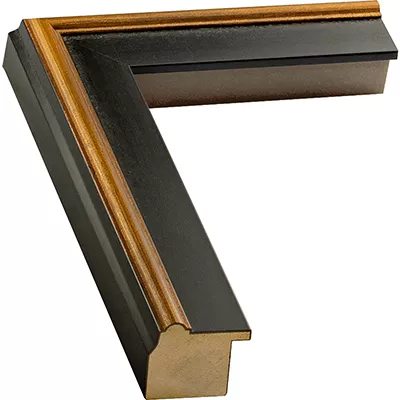
Deep Hudson Black and Gold Frame



Customize Your Design With These Options
Artwork Size
5 x 15
Change Size
Upload Image

Frame


$66.11
Glass & Acrylic
Mounting Board
Matting
Spacers and Walls
Stretcher Bar
Frame Liner
Frame Fillet
Art Thickness
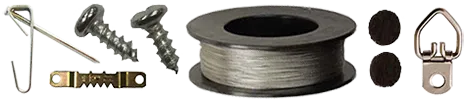
Hanging Hardware

FREE
Art Re-Shipping Box
Precision custom cut to your exact dimensions
Professionally packaged for safe shipping
Ships nationwide
Made in the USA
Experienced picture framing specialists
SKU: V669
Deep Hudson Black and Gold Frame Details
V669 is a black and gold wood picture frame featuring a rounded black-and-gold Hudson-style profile with intentional distressing and a prominent gold ridge. Its 1-3/4 inch face and 1-3/8 inch overall moulding height give the profile its characteristic scale and contour.
The 1-3/4 inch face gives Deep Hudson Black and Gold Frame a moderate visual presence. There is enough visible area for its particular profile and finish to register clearly without the breadth of a wide panel or statement frame.
Deep Hudson Black and Gold Frame has a 1-3/8 inch overall moulding height, establishing the side silhouette created by a rounded black-and-gold Hudson-style profile with intentional distressing and a prominent gold ridge. Its 1 inch usable rabbet and approximately 1/4 inch lip coverage describe the working space behind the opening. As a standard frame, the lip overlaps the front edge of the artwork or framing package.
Works Visually With
Deep Hudson Black and Gold Frame can complement landscapes, abstract textures, paintings, richly colored artwork, and layered presentations. On Deep Hudson Black and Gold Frame, the secondary color can connect with selected image or mat details while the dominant finish continues to define the outer boundary.
Matting for Deep Hudson Black and Gold Frame can repeat one of its accent colors or introduce a neutral interval, depending on whether the two-tone profile should connect directly with the image.
Design and Visual Character
The rounded gold ridge can repeat warm highlights in the artwork while the deeper black profile provides a substantial outer boundary.
The visible variation across Deep Hudson Black and Gold Frame breaks up reflected light and gives this finish more tonal movement than a uniformly smooth profile.
The 1-3/4 inch face of Deep Hudson Black and Gold Frame determines how much space is available for its two colors to interact. Contour changes across the 1-3/8 inch profile control where each accent catches light and separates from the dominant finish.
Framing specialist note: On Deep Hudson Black and Gold Frame, note whether the secondary color appears beside the artwork, at the outside edge, or across a raised detail; that placement matters as much as the 1-3/4 inch face.
Frame Specifications
- SKU
- V669
- Material
- Wood
- Face width
- 1-3/4 inches
- Overall moulding height
- 1-3/8 inches
- Usable rabbet depth
- 1 inch
- Approximate lip coverage
- 1/4 inch
Compare Similar Black and Gold Picture Frames
- Compare with V243 - 1-3/4 inch face and 7/16 inch rabbet
- Compare with V295 - 1-5/8 inch face and 5/8 inch rabbet
- Compare with V110 - 1-13/16 inch face and 7/16 inch rabbet
- Compare with V671 - 1-5/8 inch face and 7/16 inch rabbet
Continue Shopping and Planning
- Shop black and gold wood picture frames in other widths and profile styles.
- Browse custom wood picture frame collections by color and design.
- Explore custom picture mats for artwork on paper.
Made in the USA
Handcrafted by American framing experts
Family Owned
Serving customers for over 40 years
Premium Shipping
Professionally packaged for safe delivery
Ready to Hang
Hardware included with all frames
Framing Specialists
Over 40 years of custom framing experience
