


Paper Art or a Photograph
Include the glazing, every mat layer, the artwork and its mount, and the backing board. Do not calculate from the paper alone.



 CUSTOM PICTURE FRAMES
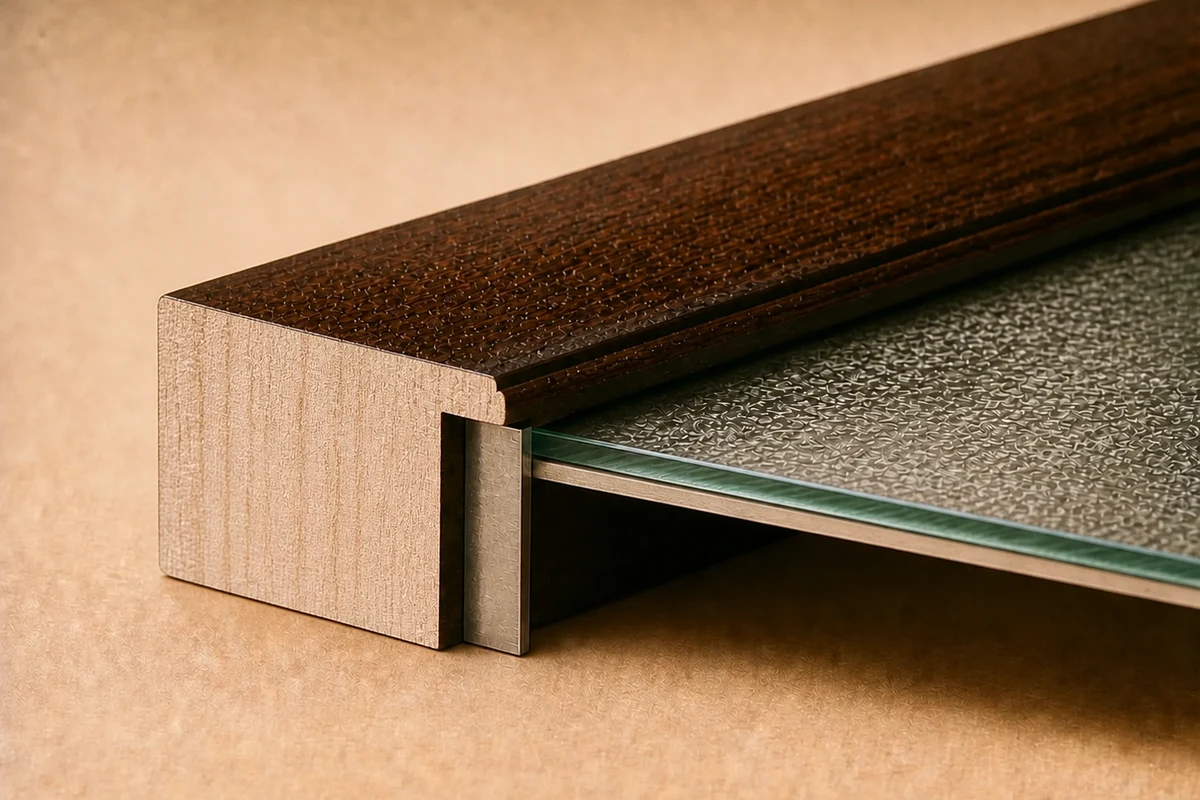
Rabbet depth is the distance from the back of the frame to the underside of the lip that goes over the art, glazing, mats, and other framing materials.
The rabbet is the recessed area along the back inside edge of a traditional picture frame. Its depth tells you how much material can sit behind the lip. This is different from the frame's face width, which is the visible width of the moulding when viewed from the front.
The lip is the small inner ledge visible at the front opening. Measure vertically from the back surface of the frame to the underside of that lip. The usable space must hold the entire framing package, not only the artwork.
If you are shopping rather than measuring a frame you already own, use the rabbet depth listed for that specific moulding.
Add every layer that will occupy the rabbet. Depending on the project, that can include glazing, mats or spacers, artwork, mounting material, backing, and any fitting allowance needed to secure the package.
Total package thickness = glazing + mats or spacers + artwork and mount + backing
Compare that total with the usable rabbet depth. The package should sit beneath the lip with enough remaining room for the selected fitting method. A deep rabbet alone does not guarantee that every object or assembly method will be suitable.
Include the glazing, every mat layer, the artwork and its mount, and the backing board. Do not calculate from the paper alone.
Compare the full canvas depth with the usable rabbet depth. A standard frame's lip overlaps the front edge of the canvas, so confirm that this is the appearance you want.
Include the deepest point, mounting materials, spacers or walls, backing, and the method used to secure the assembly. Deep objects may require a different construction.
Need help establishing the artwork dimensions first? See how to measure artwork for a custom picture frame.
Enter the actual thickness of each component in the same unit of measurement. Use zero for layers that are not part of your project.
| Component | Your thickness | Include when |
|---|---|---|
| Glazing | ________ | Glass or acrylic is used |
| Mat or spacer layers | ________ | The art is matted or separated from glazing |
| Artwork and mounting | ________ | Always include the complete mounted art |
| Backing | ________ | A backing board or panel is used |
| Total package thickness | ________ | Add all rows above |
| Usable rabbet depth | ________ | Measure or check the moulding specification |
If the usable rabbet depth exceeds the package thickness, the difference is the space available for fitting and securing materials.
If the package is as deep as or deeper than the rabbet, review the frame profile or fitting plan before ordering.
It is the distance from the back of the frame to the underside of the lip that goes over the art, glazing, mats, and other framing materials.
Add the thickness of every layer that will sit in the frame. Compare that total with the usable rabbet depth and allow room for the materials used to secure the package.
No. Face width describes how wide the moulding looks from the front. Rabbet depth describes the space available from the back of the frame to the underside of its inner lip.
No. Include every component that will occupy the rabbet, including any glazing, mats or spacers, mounting material, and backing.
Once you know the package thickness, compare it with the specification for each moulding you consider. Explore the curated custom wood picture frames hub, or learn how to fit art into a wood picture frame.
Reviewed by WebPictureFrames.com framing specialists. Last reviewed August 6, 2026.