Ok

Ok

What is the question
Cancel
PICTURE FRAMES
 CUSTOM PICTURE FRAMES
Design Your Framing Package Online!
Add Mats, Glass & Acrylic, Mounting Board And More.




Search
☰

My Account
Log In
Favorites
Saved Designs
Shopping Cart
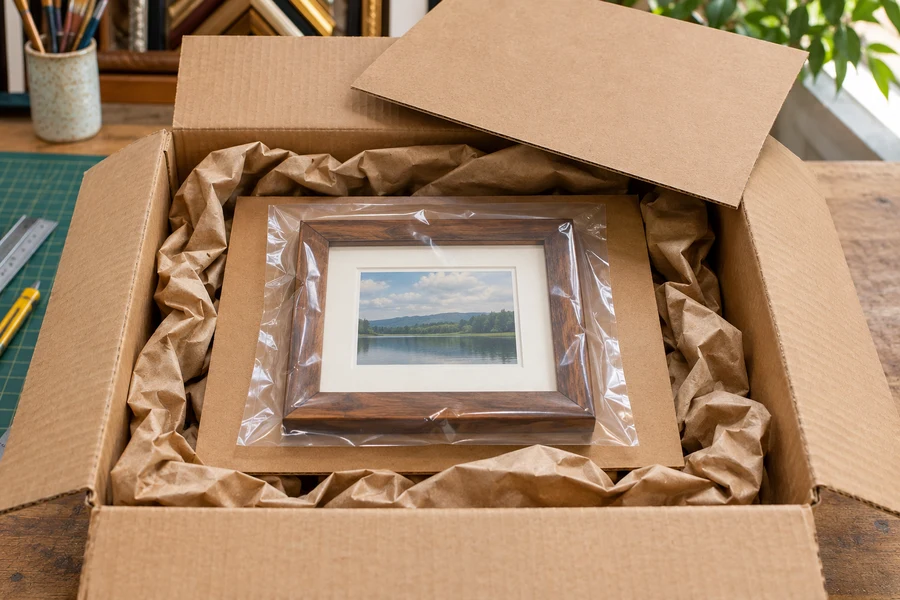
Pack a suitable small frame with a finish barrier, front-and-back protection, cushioning, and a rigid box. Assess glass, fragile artwork, and unusual loads separately.
Watch: How to Pack and Ship a Picture Frame
Measure the frame and allow room for cushioning
This packing arrangement is intended for suitable small frames, with 8 by 10 to 16 by 20 inches as the example range rather than a capacity rating. Measure the outside of the actual frame, including its depth, before choosing a box. The example allows about 1-1/2 to 2 inches of space around the frame, including above and below it, for cushioning.
Choose a box for your actual package rather than assuming one standard carton fits every frame. This method is not a guarantee against transit damage or a substitute for a carrier's current packaging requirements.
The four packing layers and their jobs
| Layer | Job | Check |
|---|---|---|
| Clean plastic bag | Separates the finish from rubbing cardboard. | Keep tape on the bag and off the frame. |
| Two cardboard sheets | Protect front and back and locate the frame within the carton. | Cover the full footprint and fit the intended box. |
| Packing-paper cushion | Separates the protected assembly from the outer container. | Place cushioning below and above; assess the actual shipment. |
| Rigid outer box | Contains and protects the packed arrangement. | Use sound packaging and current carrier requirements. |
| Glass or special artwork | Requires a separate packing assessment. | A small-frame acrylic packing arrangement is not a universal shipping guarantee. |
Bag the frame before it touches cardboard
- Prepare two flat cardboard sheets sized to fit snugly inside the box.
- Place the frame in a clean plastic bag. Cardboard rubbing directly on a finish can abrade it.
- Close the bag with tape on the bag itself. Keep tape off the frame finish.
Assess acrylic-glazed and glass-glazed shipments separately. Do not assume this packing example makes glazed artwork with glass safe to ship; glass may need a different package and specialist advice.
Make the protective cardboard sandwich
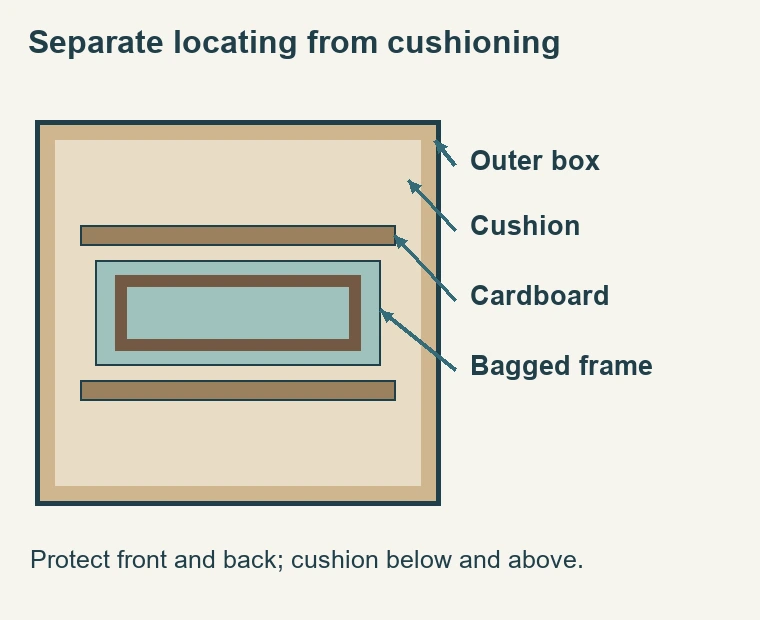
Center the bagged frame between the two cardboard sheets. Bring the sheets together beyond the frame and tape the sandwich so the frame stays located inside it. The cardboard must extend beyond the frame edges.
More than one frame requires a separate assessment of the deeper box and protective layers. The packing arrangement still requires protecting each frame and preventing finishes or glazing from rubbing against another item.
Cushion the sandwich and close the box
- Place crumpled packing paper in the bottom of the box.
- Lower the cardboard sandwich onto that cushion.
- Add packing paper above it, keeping the package supported rather than leaving an unfilled space.
- Include any paperwork, close the flaps, and tape the box seams securely.
Before handing over the parcel, check that the contents cannot slide freely inside. For making the frame itself ready before packing, see wood-frame fitting and artwork-retaining hardware.
Match the packing method to the actual item
- This small-frame method is built around a protective bag, two cardboard sheets, cushioning paper, and an outer box. Consider frames roughly between 8 by 10 and 16 by 20 inches. Treat that as an example scope rather than a universal packing certification. A large, unusually heavy, fragile, valuable, or glass-glazed work may require a different assessment and packaging plan.
- Check each protective layer without treating this arrangement as current carrier acceptance guidance or a guarantee of an undamaged shipment. Compare the actual item with the carrier's current requirements. For a broader carrier reference, FedEx's artwork shipping guidance describes front-and-back protection, cushioning, and a rigid outer container, with additional considerations for particular artwork.
- Start with a frame that is ready to be transported. Check the joints, artwork retention, and any loose fittings. Packing around an already loose assembly does not correct its construction. Do not rely on the shipping box to keep an unsecured artwork package inside the frame. Resolve internal fitting issues before the protective bag and cardboard make them less visible.
Measure the outside of the completed frame
- Use the frame's outside width, height, and depth, including any protruding components relevant to the package. The artwork size printed on an order is not the shipping object's outside size. A broad moulding can increase that footprint substantially. Keep these measured dimensions separate from the receiving opening and the visible image window when selecting an outer box.
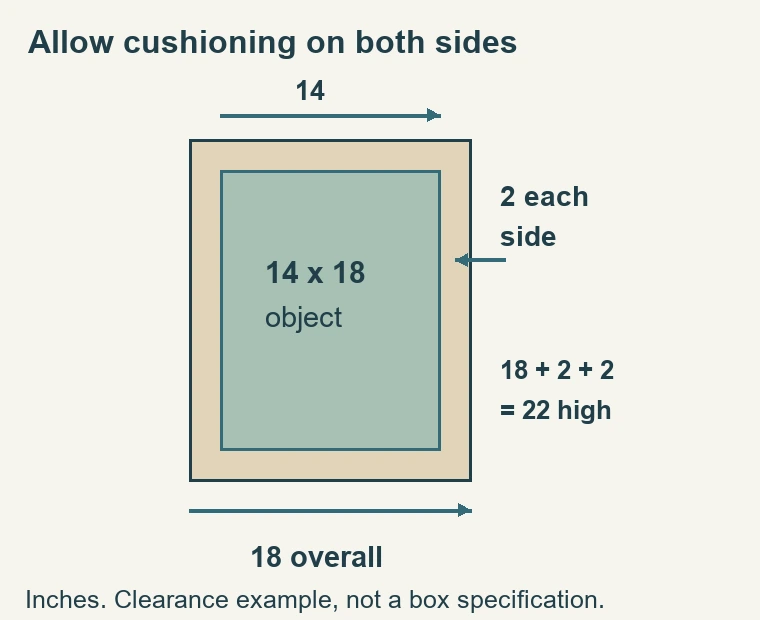
- The small-frame example allows approximately 1-1/2 to 2 inches around the frame, including above and below, for cushioning. That means space on both opposing sides, not only one extra amount added to the overall dimension. As an arithmetic example, two inches on each side of a 14-by-18-inch object requires 18 by 22 inches before considering the full packaging arrangement. This is an explanation of clearance, not a carrier-approved box specification.
- Use a box whose actual internal dimensions accommodate the protective assembly and cushioning. A nominal box label may not describe the space you assumed. Check condition, closure, and whether the cardboard sandwich can sit in the intended location. Choosing a carton merely because the bare frame can slide inside leaves no assurance that the protective layers fit.
Use the bag as a finish barrier
- Bag the frame before bringing it into contact with cardboard; rubbing cardboard can abrade the finish. Use a clean bag and keep grit or sharp debris from becoming trapped inside. A bag protects against direct rubbing in this method; it is not the cushioning or the rigid structure of the package.
- Close or secure the bag on itself. Keep tape away from the moulding finish and artwork. Adhesive that holds a wrapper closed can still damage a finish if it is applied directly to it. Check the edges of the bag so exposed adhesive cannot contact the frame when the recipient unwraps it. The useful barrier should make removal controlled rather than create another attachment to cut away from the object.
- Do not assume that the same wrapping arrangement is appropriate for every exposed artwork surface. This method uses a frame, not a universal treatment for unglazed paint or delicate media. If the work has an exposed sensitive surface, obtain a suitable packing assessment before applying plastic or another contact layer. Keep the scope of this finish barrier clear.
Build the sandwich to locate the frame
- The two flat cardboard sheets extend beyond the bagged frame and are sized to fit the outer box snugly in this arrangement. They provide front-and-back protection and help locate the frame within the carton. Center the frame between them and check that the protective sheets cover the whole outside footprint. A sheet that ends short of a vulnerable edge does not reproduce this protective geometry.
- Bring the sheets together beyond the frame and tape the sandwich so the item stays located. Keep tape on packaging surfaces. Do not tighten the sandwich by pressing hard through the glazing or forcing the moulding out of shape. The assembly should protect and locate the object rather than use it as a spacer that must absorb all pressure from the outer carton.
- Multiple-frame packing requires additional assessment of the deeper box and individual protection. That changes the depth and requires protection between items as well as around the outside. Each frame must be kept from rubbing another frame or pane. Do not multiply the item count without reassessing the complete stack, cushioning, and box. A deeper carton alone does not establish a suitable multi-item package.
Keep cushioning around the protected assembly
- Place crumpled packing paper beneath the sandwich, then add cushioning above it as described. The frame should not simply sit on the bottom of the box with all spare paper piled on top. Inspect the actual distribution before closing the flaps. A visible space at an unprotected side or a corner indicates that the packaging arrangement needs attention.
- Distinguish locating from cushioning. The cardboard sheets help position the assembly; the cushioning separates it from impacts and the outer container in this method. Filling a void with unrelated hard material is not the same operation. Use a coherent packing plan for the actual item and carrier rather than assuming any available material has equivalent behavior.
- Before sealing, check whether the protected contents can slide freely or whether the carton must be forced closed. Either observation deserves reassessment. Uncontrolled movement can defeat the intended location, while a forced closure can load the frame through its protective layers. Adjust the package as a system instead of using extra tape to hide a mismatch between item, cushioning, and box.
Treat glass and special shipments as separate decisions
- Do not treat this small-frame acrylic packing arrangement as proof that glass can be shipped in exactly the same way. Glass breakage can affect the artwork as well as the pane. Ask an appropriate packing professional or carrier about the particular framed object when its construction exceeds the small-frame example scope.
- Check current carrier requirements and service terms before tendering the parcel. Carrier policies, claims, and coverage must be checked directly for the actual shipment. Keep the artwork description and package dimensions accurate. Avoid treating a fragile label or a promise of careful handling as a replacement for a package designed for the shipment.
Inspect the finished parcel before handoff
- The frame and artwork package are secure before wrapping.
- The clean bag separates the finish from rubbing cardboard.
- Tape contacts packaging rather than the frame or artwork.
- The cardboard sheets protect the full front and back footprint.
- Cushioning is present beneath, above, and where the plan requires it.
- The contents do not slide freely and the box closes without force.
- The outer carton is sound and its seams are sealed appropriately.
- The carrier's current requirements have been checked for the actual item.
Provide a clear opening path for the recipient where practical. They should be able to remove the outer packaging without placing a blade against the frame or artwork. Keep any paperwork protected and separate from exposed adhesive. A thoughtful package supports both shipment and controlled unpacking; the final check should consider how the layers will be removed as well as how they were assembled.
Made in the USA
Handcrafted by American framing experts
Family Owned
Serving customers for over 40 years
Premium Shipping
Professionally packaged for safe delivery
Ready to Hang
Hardware included with all frames
Framing Specialists
Over 40 years of custom framing experience