Ok

Ok

What is the question
Cancel
PICTURE FRAMES
 CUSTOM PICTURE FRAMES
Design Your Framing Package Online!
Add Mats, Glass & Acrylic, Mounting Board And More.




Search
☰

My Account
Log In
Favorites
Saved Designs
Shopping Cart

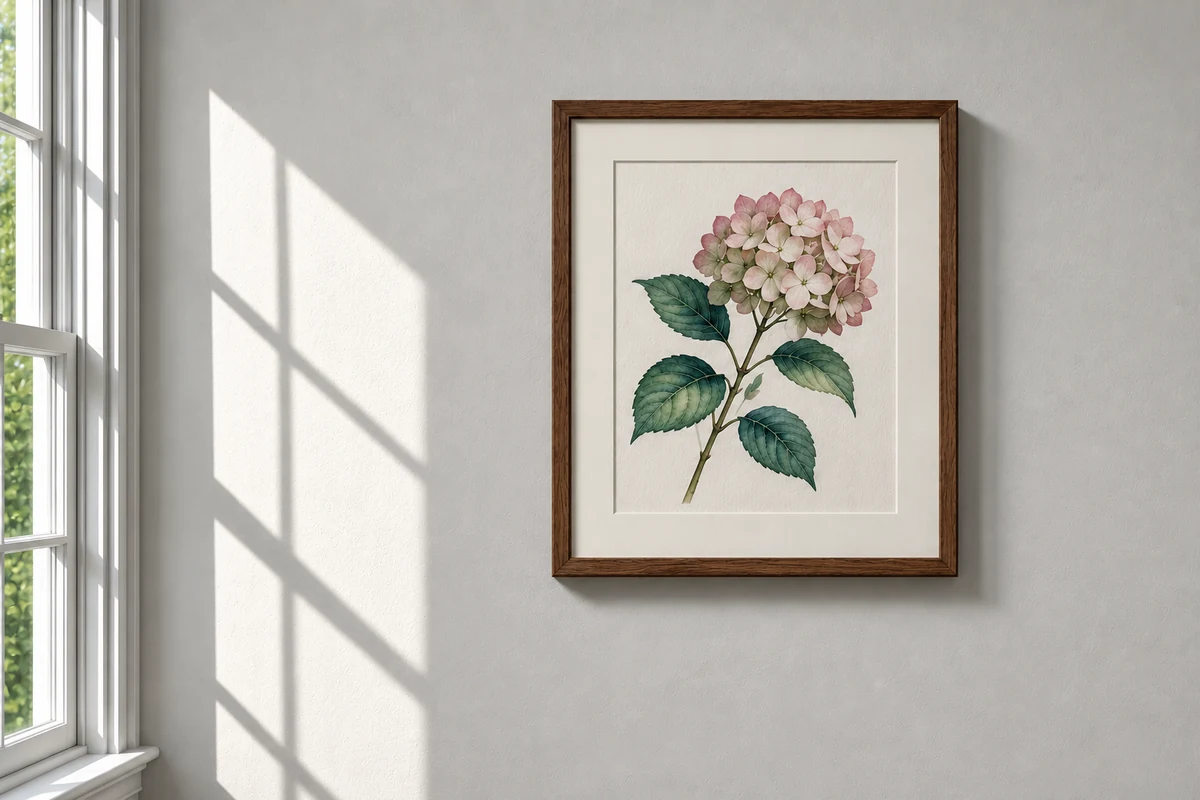
Choose a wall where direct sunlight stays off the whole frame. Check the spot at different times of day, especially for an original print, watercolor, or family photograph. UV-filtering glazing helps limit UV exposure, and the display location controls how much visible light reaches the art.
By WebPictureFrames.com. Family owned with more than 40 years of custom framing experience. Updated .
Can you hang framed art in a sunny room?
Yes. Choose a wall where direct sun stays off the whole frame, and use shades to manage bright periods. For a family photo, a watercolor, or an irreplaceable print, choose the dimmer of the suitable spots. UV-filtering glass or acrylic helps reduce UV exposure. Visible daylight and indoor lighting can still contribute to fading over time.
Judge the wall where the art will hang. A room can look bright and have a well-shaded wall. A corner that looks dark in the morning can receive direct sun later in the day.
How to check whether sunlight reaches a picture frame
- Mark the whole frame. If the artwork is already framed, measure its outside width and height. Use removable markers compatible with the wall finish to outline the four corners, or mark them on a photo of the wall. Checking only the hanging point can miss a spot of sunlight that crosses a lower corner.
- Look several times on a clear day. Observe the wall in the morning, around midday, and in the afternoon with the window coverings as you normally use them. A bright patch with distinct edges is a clue that direct sunlight reaches the wall. If a patch is close to the outline, look again as it moves.
- Adjust the spot or the window covering. If the patch crosses any part of the outline, move the frame beyond its path or close the shade during that period. Look again with the shade in its new position.
- Recheck when the season changes. Sunlight can enter the same window at a different angle later in the year. Make a second check after a noticeable change in the room's light, especially if the artwork is near a window.
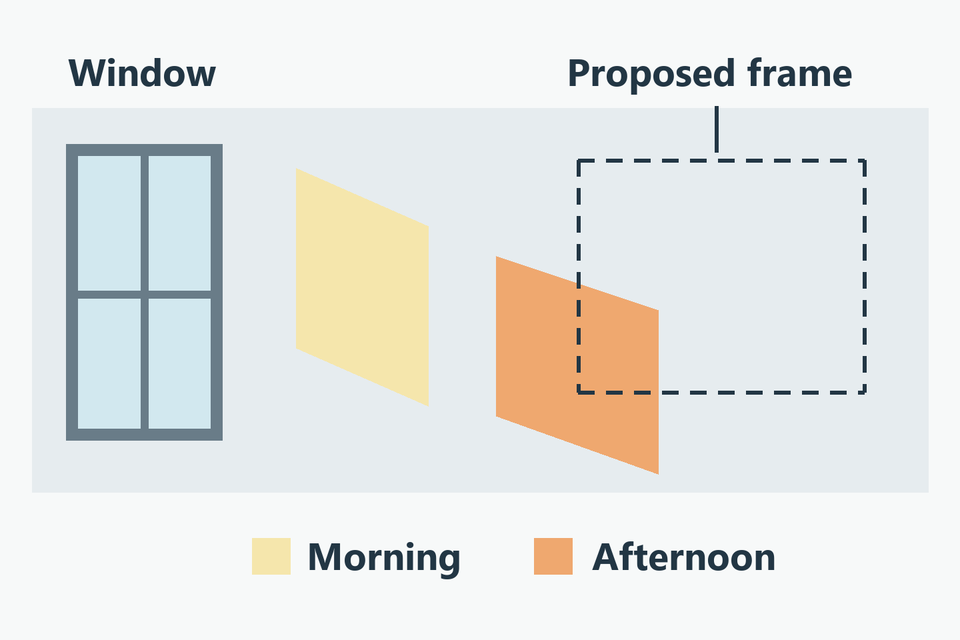
A watercolor that catches afternoon sun
Suppose an 18 × 24-inch frame looks shaded when you mark it in the morning. By midafternoon, a patch from the window reaches the lower left corner. Try the same-size outline on a nearby wall, or lower the shade during the hours the patch reaches the frame. Check the second position at the time you saw the overlap, then check it again at the other times of day. That tells you whether the change solves the problem when you normally use the room.
Include the windows you rarely think about. A glass patio door across the room can send light farther into it than the window beside the proposed picture. Nearby trees can also change how much light gets through between the leafed and bare seasons. Record which opening the patch comes from so you know which shade to adjust.
How to tell direct sun, bright daylight, and reflections apart
| What you see | What to check or change |
|---|---|
| A bright patch with a window-shaped edge | Check whether the patch crosses the artwork or any part of the proposed outline. Follow it along the wall. Pick a spot outside its path or use a shade during the affected hours. |
| A whole wall that looks bright for hours | Compare it with a dimmer wall using the same view and time of day. Even without a distinct sun patch, a brightly lit wall can expose sensitive colors to a lot of visible light over time. |
| A window or lamp reflected in the glass | Take a step to one side. If the bright shape shifts as you move, you are seeing a reflection. Adjust the view, shade the window, or change the lamp position. Check the wall itself separately for direct sun. |
A reflection tells you what you see from one viewing position. A sun patch on the wall tells you where the light is falling. That distinction matters when a piece is easy to see but still sits in a very bright spot all afternoon. If reflections are the main problem, see our glass and acrylic comparison for glazing options.
Choose a display spot for the artwork you have
| Artwork | Where to start |
|---|---|
| Original watercolor or other work on paper | Use a wall away from direct sun and prolonged bright daylight. If you want to see the image in a brighter spot, hang a reproduction there and keep the original in a dimmer location. |
| Family photograph or document | Display a good copy if the original is difficult to replace. Keep the original protected from light when it isn't being viewed. |
| Poster, art print, or reproduction | Use a shaded spot, especially if the print matters to you. A replaceable reproduction offers more flexibility when the only available wall gets strong light. |
| Oil or acrylic painting on canvas | Choose a spot away from direct sun. Pigments and painting materials vary, so use the artist's display instructions where available. |
For an already-framed picture, base the decision on the artwork and the light it receives. When the materials are unknown, a dimmer wall is a practical choice. If you are framing a piece on paper for the first time, use our guide to framing a print for the mounting and framing decisions.
Does UV-filtering picture frame glass stop fading?
UV-filtering glass and acrylic reduce the ultraviolet light reaching artwork. Fading can still occur because visible light reaches the work too. Reducing the strength of the light and the time it spends on the artwork helps limit cumulative exposure.
Look for a UV-filtering specification on the exact product. Museum Glass combines UV filtering with reduced reflections. Conservation clear acrylic is a UV-filtering option when you prefer acrylic. A UV-filtering percentage describes ultraviolet light. It cannot tell you how much slower your particular photograph or print will fade.
If you already own the frame, look for an invoice or a record of the glazing used. A clear, tinted, or low-reflection appearance alone gives you little information about UV filtering. Keep the glazing name with the framing receipt so you know which pane to replace if it is damaged later.
For a framed watercolor or photograph, consider the framing package as well as the location. A suitable mat or spacers keep the artwork away from the pane. Our guide to conservation mats and glazing explains how the components work together.
Reduce the amount of light that reaches the art
- Control daylight at the window. Adjust blinds or a shade when direct sun reaches the wall. Walk back to the picture to verify that the bright patch is gone and check again later if the path still passes close to the frame.
- Use picture lights when you want to see the art. Start with enough light to see the detail comfortably from your usual viewing spot. Switch the light off between viewings. Our picture lighting guide shows how to aim a light and check for reflections.
- Give important originals time away from light. Rotate artwork on display or keep an original in protected storage and hang a copy. This is especially useful if you want a family photograph in a room that stays bright most of the day.
Use the window covering you will actually keep in place
A sheer curtain can soften a patch while leaving the wall brightly lit. If the frame still sits in a bright area, try a more opaque shade or choose another spot. For adjustable blinds, check the light through the edges as well as through the slats. A narrow streak can cross the artwork as the sun moves.
If you are considering window film, check its UV filtering and visible light transmission separately. A clear UV-filtering film can leave the wall bright. If the room needs to stay bright most of the day, move the original to a dimmer wall and display a copy in the sunny spot.
If a gallery wall includes several works, check the position of each piece. Hang the originals where the light stays lower, then use reproductions in the brighter positions. One frame can be several feet from the next and still receive a very different amount of light.
What to do if the artwork already looks faded
Look at the picture in indirect daylight. Record where the change is visible, then move the frame away from bright light. A color change near a mat edge or a difference between exposed and covered areas can be a clue about past exposure. The colors, paper, and framing materials can change for different reasons, so avoid diagnosing the cause from appearance alone.
Take one overall photo and one close view of the area that concerns you. Note the date, where the frame hung, and whether the room normally had open shades or a picture light on. If you take another photo later, use similar lighting and the same viewing angle. Changes in the room light and reflections can make the same picture look different from one photo to the next.
Keep the work framed if the paper is fragile or stuck to the pane. If the image is important to you, a conservator can assess its condition. You can also ask our framing team about display options for a reproduction or suitable glazing for the original.
Sunny-wall checklist
- Outline the entire frame where it will hang.
- Check for direct sun in the morning, around midday, and in the afternoon on a clear day.
- Move the outline or adjust the shade if any part of it catches direct sun.
- Choose the dimmer wall for a sensitive original or display a copy in the brighter spot.
- Check the glazing specification and switch off display lights between viewings.
- Recheck the wall when the season changes.
Frequently asked questions about sunlight and fading
Can I hang framed art in a sunny room?
Yes. Choose a spot where direct sunlight stays off the whole frame during the day. For an original watercolor, a family photograph, or another sensitive piece, favor a location with lower ambient light and use blinds or shades during bright periods.
Does UV-filtering glass prevent artwork from fading?
UV-filtering glass reduces ultraviolet light reaching the artwork. Visible light can still fade sensitive colors over time. Use UV-filtering glazing together with a shaded display location and keep unnecessary lights off.
Can indirect sunlight fade framed artwork?
Yes. Diffuse daylight still contains visible light, and exposure adds up over time. A wall without direct sun is a better starting point. For sensitive originals, favor a dimmer location or display a reproduction in the brighter spot.
Can an LED picture light fade artwork?
Yes. Visible light from any picture light adds to the artwork's exposure. Use a level that lets you see detail comfortably, and switch the light off between viewings. Count daylight and other room lights as part of the total exposure too.
How quickly will a print fade in a sunny room?
The rate depends on the inks or pigments, the strength of the light, and how long the work is exposed. There is no reliable timetable for an unknown print. If you see a color change or a sharp line along the mat opening, move the frame out of bright light and keep a record of what you see.
Can UV-filtering glazing restore an already faded picture?
UV-filtering glazing can reduce future ultraviolet exposure. Faded colors will stay faded after a glazing change. Keep the original and ask a conservator about treatment options if the work is important to you.
Made in the USA
Handcrafted by American framing experts
Family Owned
Serving customers for over 40 years
Premium Shipping
Professionally packaged for safe delivery
Ready to Hang
Hardware included with all frames
Framing Specialists
Over 40 years of custom framing experience